How many kVA your event needs
Add up what you plug in — the sound engineer and the caterer know their numbers — and allow for the start-up surge of fridges, air-conditioners and coffee machines. These are the sizes operators on the island actually send:
Party or ceremony, up to 60 guests
What runs: A DJ or a small band, lighting, a bar fridge, phone chargers
Generator: 6–10 kVA, single-phase
Wedding, 100–150 guests
What runs: Sound and lights for the band, two or three fridges, string lights across the garden, a coffee machine
Generator: 20–30 kVA, single- or three-phase
Wedding, 200+ guests, with a kitchen
What runs: Everything above plus a catering kitchen (ovens, warmers) and air-conditioning in a marquee
Generator: 60–100 kVA, three-phase
Stage at a festival, a fair
What runs: A full PA and lighting rig, several stalls, a second generator for the food court
Generator: 100 kVA and up, often two sets
| Event | What runs | Generator |
|---|---|---|
| Party or ceremony, up to 60 guests | A DJ or a small band, lighting, a bar fridge, phone chargers | 6–10 kVA, single-phase |
| Wedding, 100–150 guests | Sound and lights for the band, two or three fridges, string lights across the garden, a coffee machine | 20–30 kVA, single- or three-phase |
| Wedding, 200+ guests, with a kitchen | Everything above plus a catering kitchen (ovens, warmers) and air-conditioning in a marquee | 60–100 kVA, three-phase |
| Stage at a festival, a fair | A full PA and lighting rig, several stalls, a second generator for the food court | 100 kVA and up, often two sets |
Air-conditioning in a marquee is the surprise: one 5 kW unit needs 15 kVA for its start-up alone. Tell the operator how many and they size the set with headroom rather than at the edge.
How quiet it is
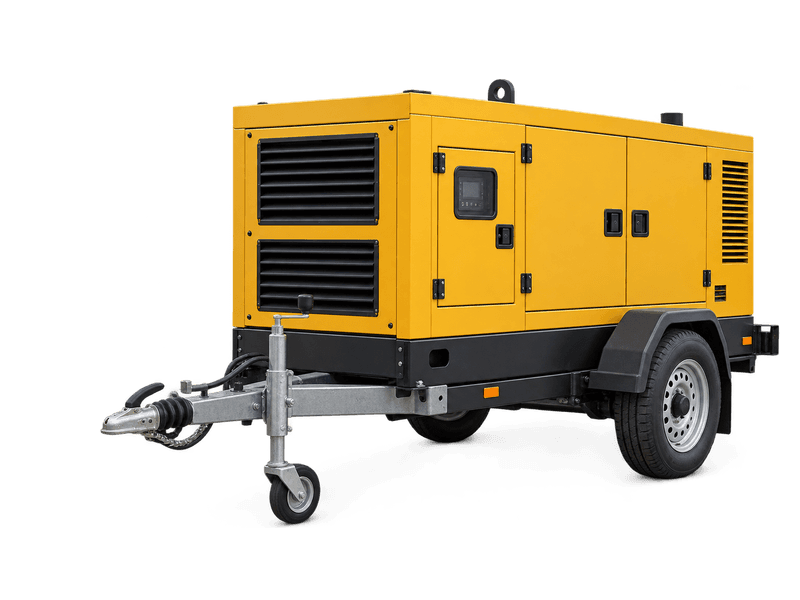
A canopy (silenced) generator makes about 60–65 dB at 7 m — a normal conversation. Put it 20–30 m from the tables, behind a wall or a hedge, downwind, and nobody at the dinner hears it; the DJ certainly does not. An open-frame set is 10–15 dB louder and belongs on a building site, not at a wedding. Say "needs to be quiet" in the form and only canopy models are offered.
Cables, boxes and connection
The generator comes with a distribution box — several 16 A and 32 A outlets, with the breakers — and cable to reach it. From the box the sound and the kitchen run their own extension leads. For a long run across a garden say the distance in the comment: a 50 m cable is a different cable from a 10 m one. The operator connects, starts and shows you the stop button; nobody at the event needs to touch it again.
Fuel and running hours
A 30 kVA set at half load burns about 4–5 litres of diesel an hour: an evening from set-up at five to the last song at one is 40–50 litres. The tank holds that, and for an all-day or a two-day event the operator refuels. Fuel is usually on top of the day rate; ask for it included in the quote so there is one number.
Booking in season
Weddings in Paphos, Ayia Napa, Limassol and the Troodos villages run from May to October, and the quiet 20–60 kVA sets are booked for most summer weekends three to four weeks ahead. Delivery is the day before, collection the day after, and both count as one day for the price when the operator can plan them. Beach venues need the generator placed where the truck can reach — ask the venue where previous couples put theirs.
What it typically costs
- 10–20 kVA
- €40–70 a day; a week costs about four days
- 50–100 kVA
- €90–180 a day
- 200–500 kVA
- €250–600 a day, usually by the month
- Fuel
- on top, unless agreed otherwise
What operators on the island usually quote (open listings and price lists, October 2026), VAT not included unless stated. Your operator confirms the exact price for your job before anything is agreed.