Strip, pad or raft: what the drawing shows
The civil engineer chooses the foundation, from the ground and the weight of the building, and it is on the permit drawings. For the dig, only its shape matters. Strip footings are trenches along the walls, filled with reinforced concrete. Pad footings are square holes under the columns, usually joined by trenches for the tie beams; many houses on the island are a concrete frame and have these. A raft is one concrete slab under the whole building: the dig is a shallow, level box the size of the footprint plus a margin.
Trenches and pads are precise work to a line and a level with a narrow bucket; a raft is bulk digging with a wide one. A raft moves more soil but often takes no longer.
Working out the volume
The example is a house of 12 × 10 m on strip footings with one internal wall across the 10 m side, trenches 0.6 m wide and 1 m deep, and the same house on a raft dug 0.5 m deep. For your own house, use the figures on the drawing.
Length or area
Strip footings: Outer walls 2 × (12 + 10) = 44 m, plus the internal wall 10 m: 54 m of trench
Raft: Footprint plus 0.5 m all round: 13 × 11 = 143 m²
In the ground
Strip footings: 54 × 0.6 × 1 = about 32 m³
Raft: 143 × 0.5 = about 72 m³
Loose, on the truck (+25–30 %)
Strip footings: about 40–42 m³
Raft: about 89–93 m³
Tipper loads of 10–12 m³
Strip footings: 4–5 loads
Raft: 8–10 loads
| Step | Strip footings | Raft |
|---|---|---|
| Length or area | Outer walls 2 × (12 + 10) = 44 m, plus the internal wall 10 m: 54 m of trench | Footprint plus 0.5 m all round: 13 × 11 = 143 m² |
| In the ground | 54 × 0.6 × 1 = about 32 m³ | 143 × 0.5 = about 72 m³ |
| Loose, on the truck (+25–30 %) | about 40–42 m³ | about 89–93 m³ |
| Tipper loads of 10–12 m³ | 4–5 loads | 8–10 loads |
As in the pool guide: rock and soil take up 25–30 % more room once dug, and a three-axle tipper carries 10–12 m³. On a sloping plot, add the cut that levels the platform; it can be bigger than the footings.
Which machine for which plot
Open land, a truck drives in
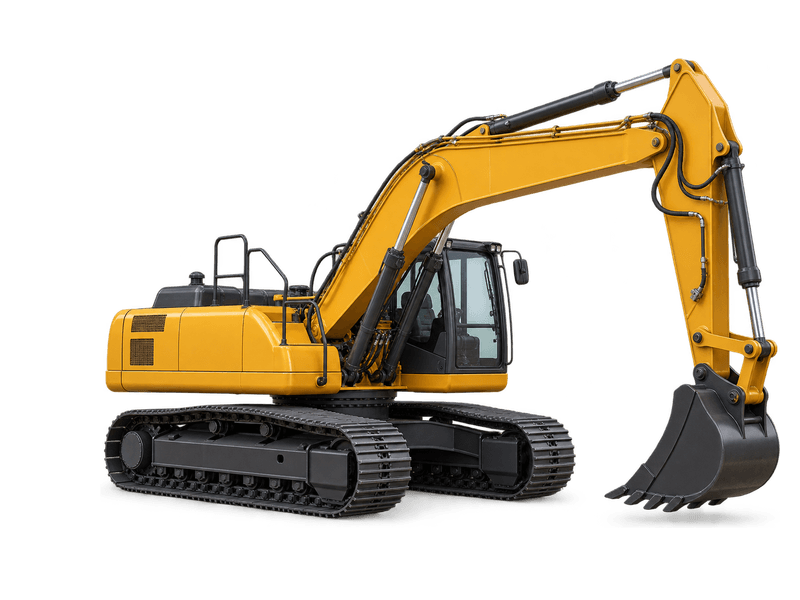
Machine: Excavator 8–14 t with its operator (5–8 t for a small house)
Why: Digs to line and level fast, loads the tippers directly
A big footprint, a raft or a basement, rock
Machine: Excavator 14–20 t with a breaker
Why: Carries the heavier breaker that gets through limestone
A tight town plot between walls, access under 3 m
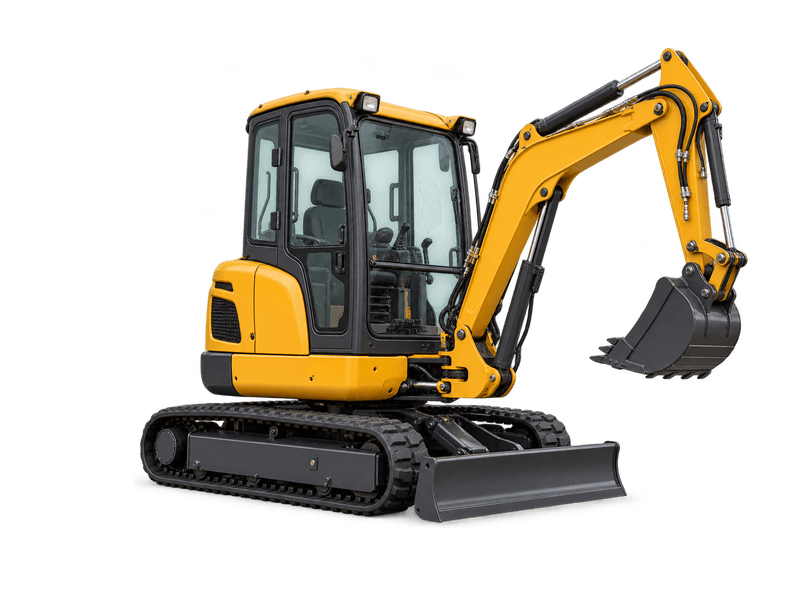
Machine: Mini digger 3–5 t with its operator
Why: Passes a 1.5–3 m way in, works close to walls
Spoil has to cross the plot
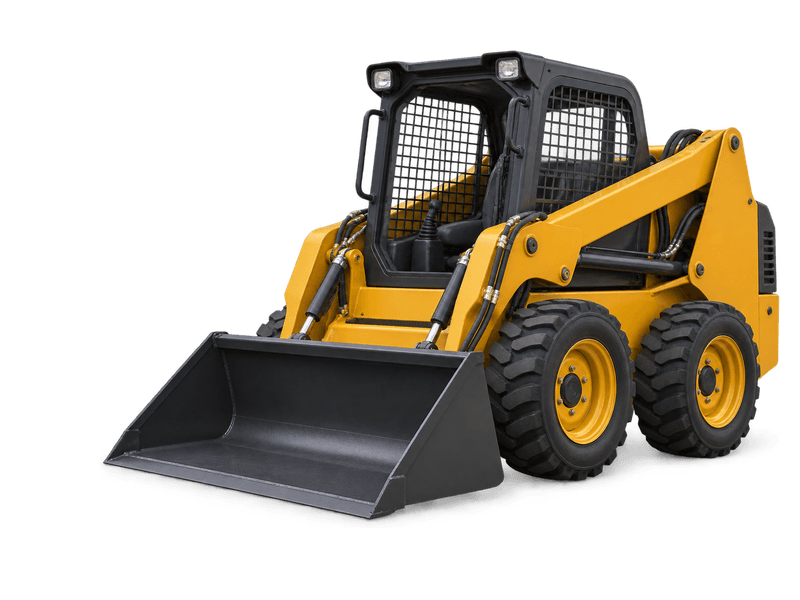
Machine: Bobcat
Why: Carries spoil to the truck or a heap, then levels
The base before the concrete
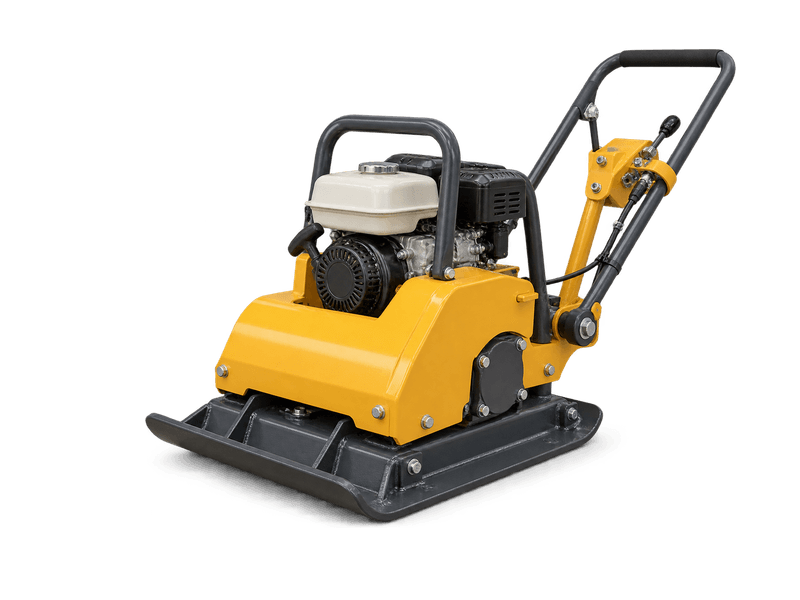
Machine: Rammer in trenches; plate or small roller under a raft
Why: Compacts the bottom and the gravel layer
| The plot | Machine | Why |
|---|---|---|
| Open land, a truck drives in | Excavator 8–14 t with its operator (5–8 t for a small house) | Digs to line and level fast, loads the tippers directly |
| A big footprint, a raft or a basement, rock | Excavator 14–20 t with a breaker | Carries the heavier breaker that gets through limestone |
| A tight town plot between walls, access under 3 m | Mini digger 3–5 t with its operator | Passes a 1.5–3 m way in, works close to walls |
| Spoil has to cross the plot | Bobcat | Carries spoil to the truck or a heap, then levels |
| The base before the concrete | Rammer in trenches; plate or small roller under a raft | Compacts the bottom and the gravel layer |
How many days
Strip or pad footings, about 30–40 m³
Soil: One day, 5–8 t
Rock: Two to three days, 8–14 t with a breaker
Raft, about 70 m³
Soil: One day, 8–14 t, with a Bobcat helping
Rock: One and a half to two days, 14 t with a breaker
The same footings on a tight plot, 3–5 t mini digger
Soil: One to two days
Rock: Three to five days with the breaker
| Job (the example house) | Soil | Rock |
|---|---|---|
| Strip or pad footings, about 30–40 m³ | One day, 5–8 t | Two to three days, 8–14 t with a breaker |
| Raft, about 70 m³ | One day, 8–14 t, with a Bobcat helping | One and a half to two days, 14 t with a breaker |
| The same footings on a tight plot, 3–5 t mini digger | One to two days | Three to five days with the breaker |
If one tipper shuttles to a tip half an hour away, the digger stands and waits. Two tippers on rotation, or a heap that a Bobcat loads later, keep it digging.
What comes on top of the digger
- Taking the spoil away. Priced per tipper load, tip fee inside. Clean soil and rock can often go to a nearby plot that needs fill, which is cheaper.
- Breaking rock. The breaker adds to the rate (on a mini digger, €30–60 a day). You find out you need it when the bucket stops, so ask for the price with and without it.
- The low-loader for a tracked excavator, priced by distance.
- A street permit, only if the machine or trucks stand on a public road.
Per cubic metre, per day or per job
Operators on the island price an excavator with its operator by the hour with a minimum, or by the day. For a whole foundation some quote the job, and some quote per m³ after walking the plot. That figure does not carry from one plot to the next: behind it are how fast the ground digs (clay and sand quickly, limestone only with the breaker) and how far and how often the trucks go. A rate from a job on the Nicosia plain says little about a hillside plot above Limassol. Ask for the price per day and the number of loads, and any two quotes compare.
- Self-drive, 1–2 t
- €150–220 a day, cheaper per day for a week
- Self-drive, 3–5 t
- €220–300 a day
- With operator
- €350–450 a day, or €50–70 an hour with a €150 minimum
- Breaker or auger
- €30–60 a day on top
- 5–20 t with operator
- €55–85 an hour, minimum 4–8 hours; about €450–700 a day
- Low-loader transport of a tracked machine
- separate, by distance
- Taking the soil away
- per tipper load, on top
What operators on the island usually quote (open listings and price lists, October 2026), VAT not included unless stated. Your operator confirms the exact price for your job before anything is agreed.